Hadith Learning
Hadith is one of the primary sources of Islamic guidance after the Qur’an. The Hadith preserves the sayings, actions, approvals, and guidance of Prophet Muhammad ﷺ and helps Muslims understand how the teachings of the Qur’an are applied in practical life.
Our Hadith Learning programme follows a gradual and structured approach. Students are introduced to Hadith according to their level, beginning with selected authentic Hadith and gradually progressing towards the study of Hadith sciences, Arabic texts, principles of authentication, and classical Hadith collections.
Why Learn Hadith?
Studying Hadith helps students:
- Understand the teachings and practical guidance of Prophet Muhammad ﷺ
- Develop a stronger connection with the Qur’an and Sunnah
- Learn Islamic manners, morals and character
- Understand the practical aspects of worship and daily life
- Distinguish between authentic and weak narrations at an appropriate level
- Develop the knowledge required for advanced Islamic studies
Foundation Before Studying Hadith
Before progressing to advanced Hadith studies, students should gradually develop a foundation in several areas:
1. Qur’anic Knowledge
Students should have a basic understanding of the Qur’an, its major themes and fundamental Islamic teachings.
2. Aqeedah
A sound understanding of the essential beliefs of Islam provides an important foundation for studying Islamic texts.
3. Fiqh
Students should have basic knowledge of Islamic rulings, particularly those related to Salah, fasting, purification, Zakah and other essential matters.
4. Seerah
Knowledge of the life of Prophet Muhammad ﷺ helps students understand the circumstances and background of many Hadith.
5. Arabic Language
For higher-level Hadith studies, Arabic is essential. Students should gradually learn:
- Basic Arabic vocabulary
- Reading and understanding Arabic sentences
- Nahw (Arabic grammar)
- Sarf (Arabic morphology)
- Common expressions used in Hadith literature
A stronger command of classical Arabic enables students to understand the original Hadith texts more accurately.
Step-by-Step Hadith Learning
Level 1 — Introduction to Hadith
Students are introduced to:
- What is Hadith?
- What is Sunnah?
- The importance of Hadith
- The relationship between Qur’an and Sunnah
- The preservation and transmission of Hadith
- Basic Hadith terminology
Level 2 — Selected Authentic Hadith
Beginners study short and authentic Hadith on important topics such as:
- Faith and sincerity
- Salah and worship
- Truthfulness and honesty
- Good manners
- Parents and family
- Seeking knowledge
- Brotherhood
- Mercy and compassion
- Rights of others
- Daily Islamic etiquette
At this stage, emphasis is placed on correct reading, memorisation, meaning and practical lessons.
Level 3 — Understanding Hadith
Students learn how to approach a Hadith properly by studying:
- Vocabulary and difficult words
- Translation and meaning
- Context of the Hadith
- Main lessons and guidance
- Relationship with Qur’anic teachings
- Practical application in everyday life
The goal is not simply to memorise Hadith, but to understand and practise their teachings.
Level 4 — Introduction to Hadith Sciences
As students progress, they are introduced to ʿUlūm al-Ḥadīth (علوم الحديث) and Uṣūl al-Ḥadīth (أصول الحديث).
These subjects provide the principles and terminology necessary for understanding how Hadith are transmitted, studied and evaluated.
Students may gradually learn about:
- Sanad (سند) — chain of narration
- Matn (متن) — text of the Hadith
- Rawi (راوي) — narrator
- Sahih (صحيح)
- Hasan (حسن)
- Da‘if (ضعيف)
- Marfu‘ (مرفوع)
- Mawquf (موقوف)
- Maqtu‘ (مقطوع)
- Jarh wa Ta‘dil (الجرح والتعديل)
- Basic principles of Hadith authentication
Level 5 — Study of Hadith Methodology
At a more advanced level, students study the principles used by Hadith scholars to examine narrations and narrators.
This stage may include:
- Principles of accepting and rejecting narrations
- Conditions of an authentic Hadith
- Types of Hadith
- Continuity and interruption of chains
- Reliability and accuracy of narrators
- Introduction to narrator evaluation
- Basic study of Hadith criticism
This knowledge helps students understand why Hadith scholars classify narrations differently.
Level 6 — Classical Hadith Books
After developing sufficient foundational knowledge and Arabic skills, students can gradually study selected portions of recognised Hadith collections.
Beginner Level
Suitable introductory texts may include:
- Al-Arbaʿīn al-Nawawiyyah (الأربعون النووية)
- Riyāḍ al-Ṣāliḥīn (رياض الصالحين) — selected chapters
Intermediate Level
Students may progress to:
- Bulūgh al-Marām (بلوغ المرام)
- Mishkāt al-Maṣābīḥ (مشكاة المصابيح)
Advanced Level
Students with sufficient Arabic, Islamic studies and Hadith methodology may study:
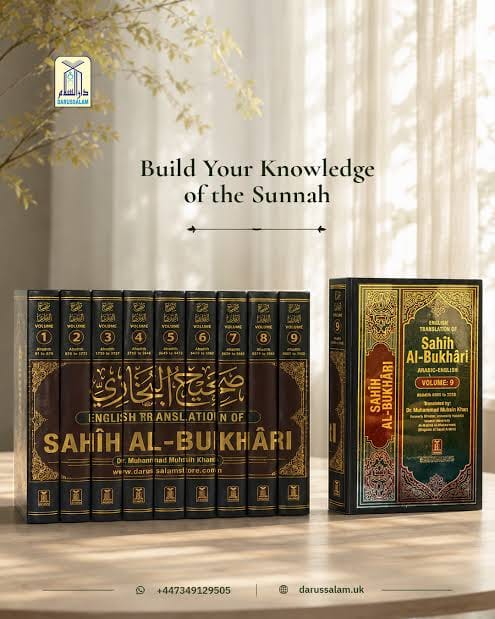
- Ṣaḥīḥ al-Bukhārī (صحيح البخاري)
- Ṣaḥīḥ Muslim (صحيح مسلم)
- Other recognised Hadith collections and their scholarly commentaries
The level and selection of books should be determined according to the student’s age, Arabic ability, previous Islamic education and learning objectives.
Essential Books for Hadith Studies
A serious student of Hadith eventually needs knowledge from several categories of books:
1. Hadith Collections
Books containing the actual narrations of the Prophet ﷺ.
2. Hadith Commentaries (Sharḥ)
Books that explain the meanings, vocabulary, context and scholarly interpretations of Hadith.
3. ʿUlūm al-Ḥadīth
Books dealing with the sciences and terminology of Hadith.
4. Uṣūl al-Ḥadīth
Books explaining the principles and methodology used in Hadith studies.
5. Books of Rijāl and Jarḥ wa Taʿdīl
Advanced reference works dealing with Hadith narrators and their reliability.
6. Arabic Language Books
Nahw, Sarf, vocabulary and classical Arabic resources needed to understand the original texts.
Practical Application of Hadith
The ultimate purpose of learning Hadith is not merely academic knowledge. Students are encouraged to apply the guidance of the Prophet Muhammad ﷺ in their daily lives.
Through Hadith education, students develop:
- Good character and manners
- Honesty and responsibility
- Respect for parents and teachers
- Kindness and compassion
- Proper worship
- Awareness of the Sunnah
- Respect for authentic Islamic knowledge
Our Approach
Our Hadith Learning programme follows a gradual, authentic and level-appropriate approach. Students begin with foundational Islamic knowledge and selected authentic Hadith, then progress towards Arabic texts, Hadith terminology, ʿUlūm al-Ḥadīth, Uṣūl al-Ḥadīth, classical Hadith collections and, where appropriate, advanced Hadith methodology.
The programme aims to help students understand, appreciate and practise the teachings of the Qur’an and Sunnah, while developing the knowledge and skills needed for further Islamic studies.