

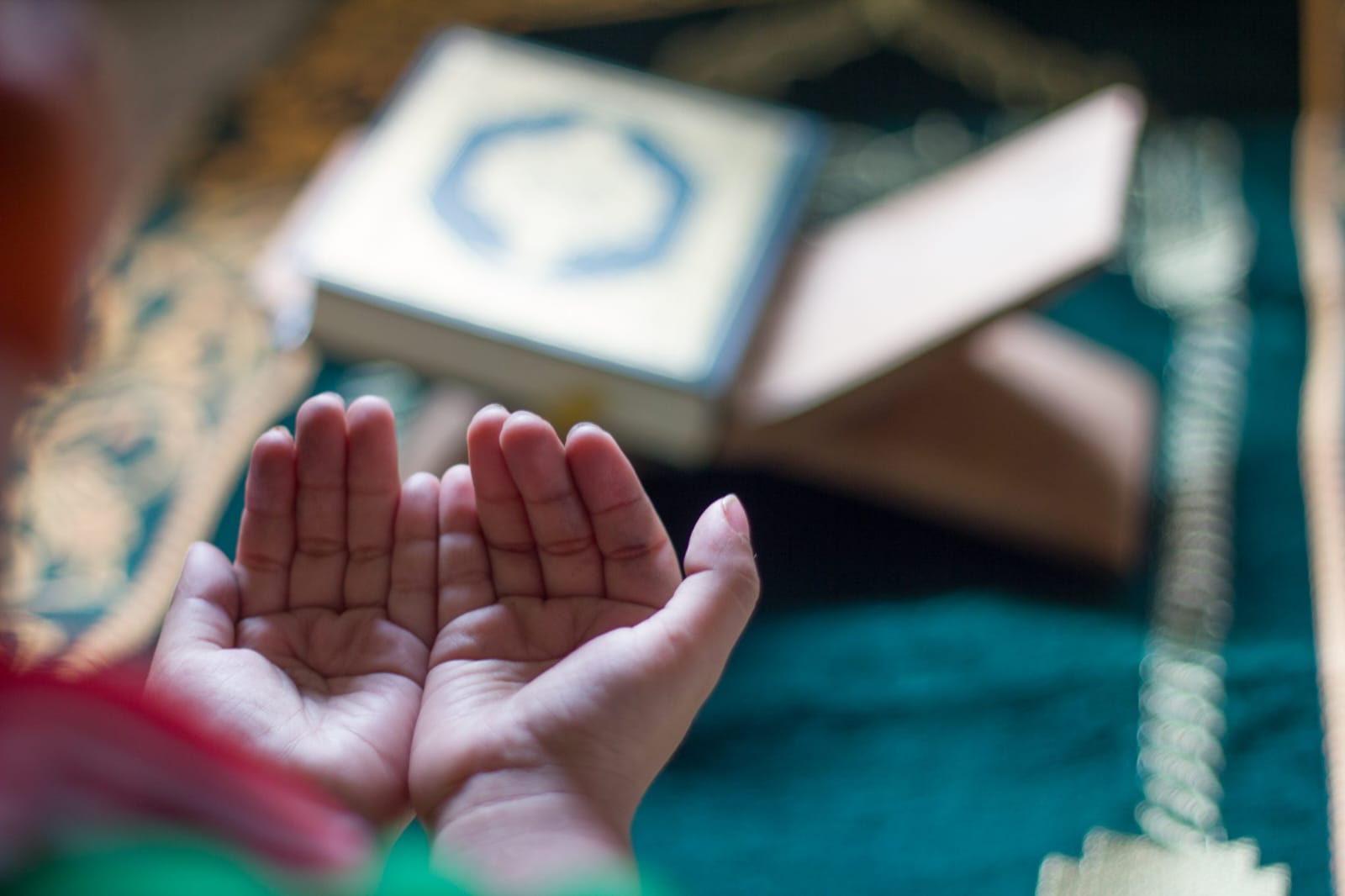
Dua & Daily Supplications
Seeking Allah’s Guidance, Protection, and Blessings in Everyday Life
Dua (supplication) is one of the greatest forms of worship and one of the most powerful ways a believer turns to Allah. Through Dua, a person seeks Allah’s guidance, mercy, forgiveness, protection, healing, and blessings.
Dua is not simply the repetition of certain words. It is an expression of faith, dependence upon Allah, and trust in His wisdom and mercy. A believer learns to turn to Allah in times of happiness, difficulty, fear, illness, uncertainty, and need.
The Qur’an: A Source of Healing and Mercy
Allah ﷻ says:
وَنُنَزِّلُ مِنَ الْقُرْآنِ مَا هُوَ شِفَاءٌ وَرَحْمَةٌ لِّلْمُؤْمِنِينَ
“And We send down of the Qur’an that which is healing and mercy for the believers.”
— Surah Al-Isra, 17:82
This verse establishes the Qur’an as a source of healing and mercy for believers. Its healing includes spiritual healing, guidance, and protection, and the Qur’an is also used in legitimate Ruqyah according to the Sunnah.
Allah ﷻ also says:
قُلْ هُوَ لِلَّذِينَ آمَنُوا هُدًى وَشِفَاءٌ
“Say, ‘It is, for those who believe, a guidance and healing.’”
— Surah Fussilat, 41:44
These verses teach believers that the Qur’an is not merely a book to be read, but a source of guidance, spiritual strength, mercy, and healing.
Protection Through Qur’an and Authentic Supplications
Islam teaches believers to seek Allah’s protection from all forms of harm and evil. Among the most important Qur’anic chapters for protection are Surah Al-Falaq and Surah An-Nas, commonly known as Al-Mu‘awwidhat.
The Prophet Muhammad ﷺ would recite these two Surahs and blow over himself when he was ill. Sayyidah ‘Aishah (رضي الله عنها) narrated that when his illness became severe, she would recite them for him and wipe his body with his hand seeking their blessing. Sahih al-Bukhari 5735; Sahih al-Bukhari 5016.
This provides a clear example from the Sunnah of using Qur’anic recitation as part of seeking Allah’s protection and healing.
Dua, Ruqyah & Protection from Sihr
Islam acknowledges Sihr (magic) as a reality, and the Qur’an mentions magic in several places. At the same time, a Muslim should not assume that every illness, difficulty, family problem, or misfortune is caused by Sihr or an unseen influence.
When a person fears spiritual harm, including Sihr or other forms of evil, they may seek protection through Ruqyah Shar‘iyyah based upon the Qur’an and authentic Sunnah.
The Prophet ﷺ approved Ruqyah as long as it did not contain Shirk. He said:
“There is no harm in Ruqyah as long as there is no Shirk in it.”
Sahih Muslim 2200.
Therefore, authentic Qur’anic recitations, prescribed supplications, and legitimate Ruqyah can be part of a believer’s means of seeking Allah’s protection and healing.
The believer understands, however, that the ultimate source of protection and healing is Allah alone. The Qur’an, Dua, and Ruqyah are means through which a person seeks His help.
How Dua Influences a Person
Regular Dua and Dhikr can transform a person’s relationship with Allah. It teaches a believer to depend upon Allah, remain hopeful during difficulties, and remember Him throughout daily life.
Through daily supplications, students learn:
- Tawakkul — placing trust in Allah while taking appropriate means
- Sabr — remaining patient during difficulties
- Shukr — appreciating Allah’s blessings
- Taqwa — developing consciousness of Allah
- Hope — maintaining hope in Allah’s mercy
- Adab & Akhlaq — developing humility and good character
- Faith and spiritual resilience — facing difficulties with reliance upon Allah
Daily Supplications for Everyday Life
At our academy, students are taught authentic Duas and Adhkar for different situations in their daily lives, including:
- Morning and evening Adhkar
- Waking up and going to sleep
- Before and after eating
- Entering and leaving the home
- Entering and leaving the bathroom
- Travelling
- Seeking knowledge
- Asking Allah for forgiveness
- Seeking protection from evil and harm
- During illness and difficulty
- Before beginning important activities
Students are encouraged not only to memorize these supplications but also to understand their meanings and practice them regularly.
Our Approach to Dua & Daily Supplications
Our teachers guide students according to the Qur’an and authentic Sunnah. Students learn the correct words, meanings, occasions, and manners of Dua and gradually develop the habit of remembering Allah throughout their daily lives.
We also teach students the principles of Ruqyah Shar‘iyyah, including the importance of using authentic Qur’anic verses and Prophetic supplications and avoiding practices that contain Shirk, superstition, or unsupported rituals.
Our goal is to nurture students who turn to Allah in every circumstance—seeking His guidance in times of uncertainty, His protection in times of fear, His mercy in times of difficulty, and His blessings in times of ease.
A Lifelong Connection with Allah
Dua is more than asking for something. It is an act of worship and a means of developing a lifelong connection with Allah.
By learning and practicing authentic daily supplications, students grow with a heart that remembers Allah, a mind guided by faith, and a character shaped by Qur’anic and Prophetic teachings.
Our aim is not merely to teach students Duas to memorize, but to help them build a life in which they regularly turn to Allah for guidance, protection, healing, and peace.